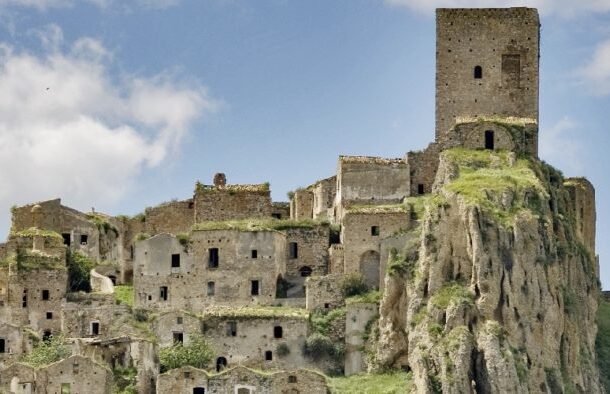
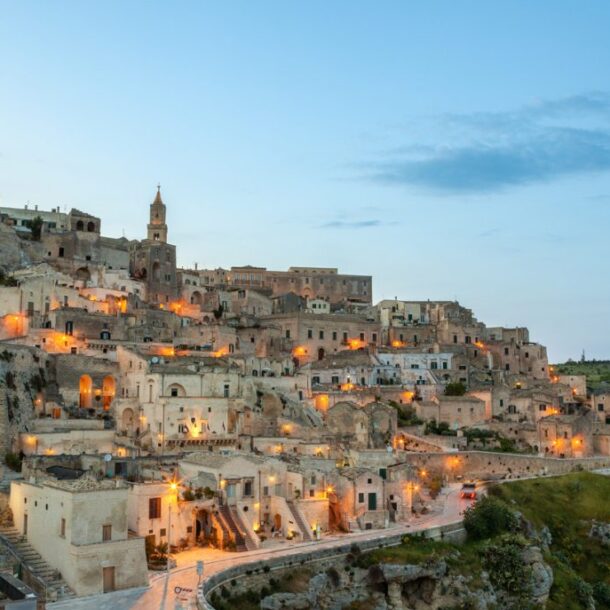
The village’s name derives from the Latin *Praedium Allianum*—meaning the estate of Allius, a Roman *nomen* (family name). Due to its proximity to the Agri and Sinni rivers, it was an important hub for trade among Greek, Etruscan, and Oenotrian civilizations since ancient times; this is evidenced by the discovery of a necropolis—dating from the 7th to the 6th century BC—containing over a thousand tombs and numerous artifacts.
These artifacts are now housed in the Siritide Museum in Policoro. Some sources mention a settlement of shepherds that was already established by the time of Pyrrhus, in 280 BC. However, the earliest texts officially citing Aliano date back to 1060, the year of a papal bull assigning the administration of the village to the Bishop of Tricarico.
In the 8th century, various caves carved into the alluvial sedimentary rock of the Fosso San Lorenzo area—which had already been inhabited in prehistoric times—provided refuge for numerous Basilian monks fleeing iconoclastic persecutions in the East. During the medieval period, Aliano was a fiefdom held by several families, including the Sanseverinos, the Carafas, and the Colonnas.